Designing UGIs as dynamic processes
Research Training Group on Urban Green Infrastructure [RTG UGI]
The research project Designing UGIs as dynamic processes investigated how urban tree planting could be planned around a desired future canopy while accounting for how trees develop over time. It examined the effects of urban microclimate, shading from buildings and competition between trees on canopy growth.
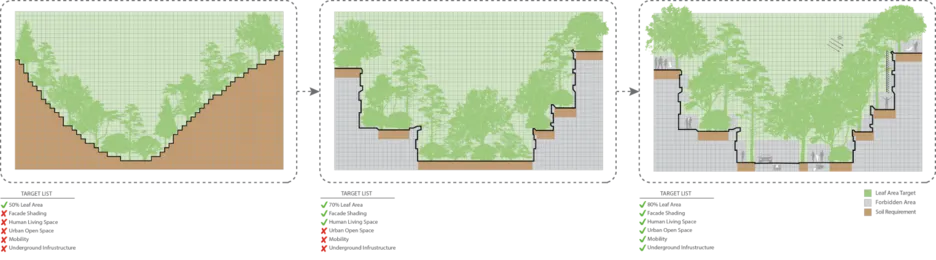
The project combined a three-dimensional voxel model of the desired leaf-area distribution with simulations of tree growth. It examined how microclimate could be incorporated into the CityTree model and how simulated canopy development could inform an iterative planting design process. A complementary research project focused on guiding tree growth through pruning and bending branches.
Research objectives

O1: Defining the target leaf area
The first objective was to develop a three-dimensional voxel model representing the desired distribution of leaf area or leaf density. This spatial target took existing buildings and other site constraints into account.
O2: Incorporating microclimate into the tree growth model
The project aimed to evaluate how urban microclimate affected tree growth and how these effects could be represented in the CityTree model. This included conditions created by the surrounding built environment, such as shading.
O3: Identifying patterns in urban tree growth
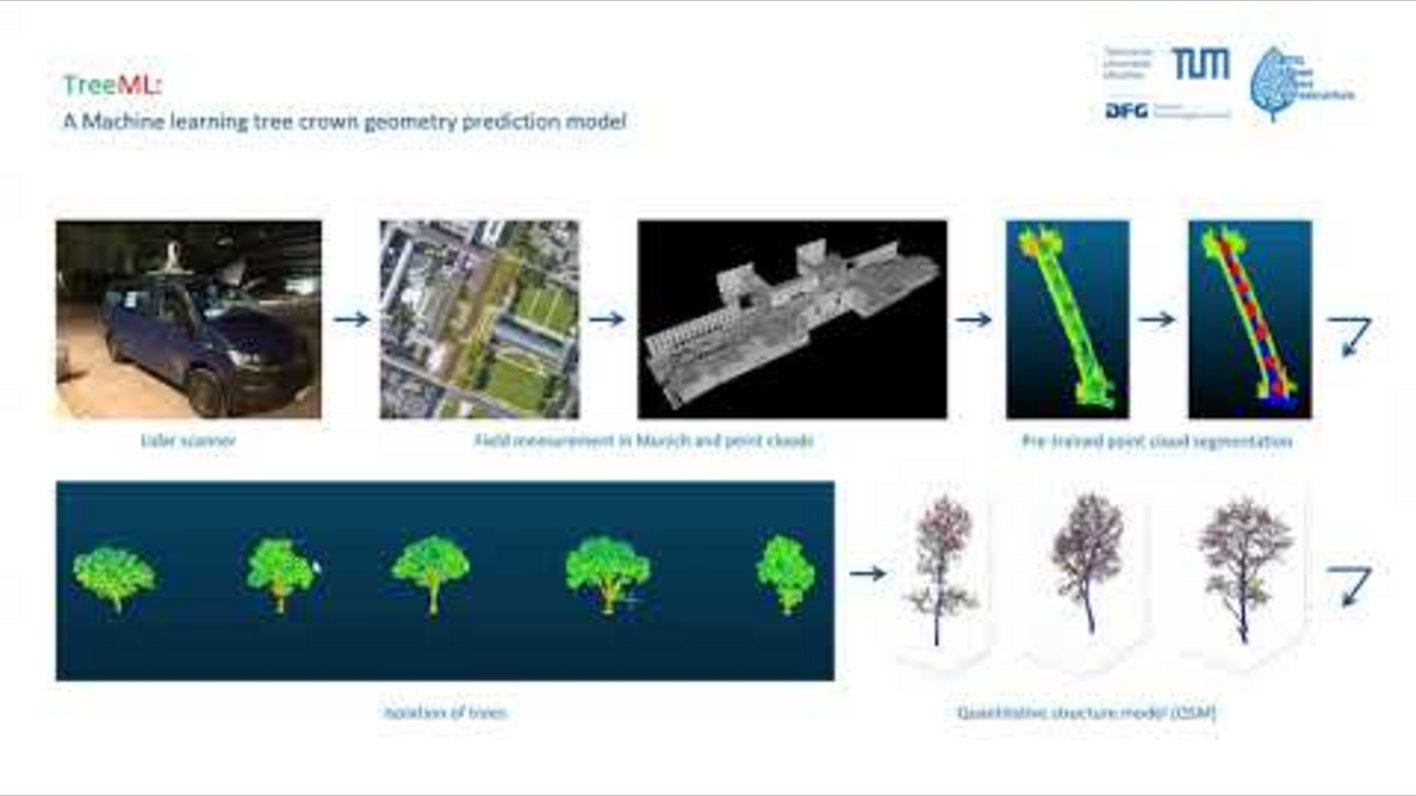
Experimental and simulated data were used to examine relationships between tree growth and the geometry of nearby buildings and trees. Machine-learning methods were explored to predict changes in growth rates under these spatial conditions.
O4: Simulating canopy development
The aim was to combine predicted growth-rate changes with the effects of competition between neighbouring trees. This would allow canopy development in an urban setting to be simulated over time.
O5: Developing planting suggestions
The project aimed to use the growth simulation and the target leaf-area model to suggest planting locations. Simulated outcomes could then be compared with the target and used to revise the design.