
Two First Prizes for TUM Students
Göderitz Award 2020

Both first prizes awarded in the 2020 Göderitz Award were presented to students from the Chair of Sustainable Urbanism at the Technical University of Munich.
Organised annually by the Johannes Göderitz Foundation, the competition brings together selected urban design and planning chairs from universities across Germany and Austria. Based on design and research projects developed within their respective academic programmes, students submit their work for evaluation by an expert jury.
The 2020/21 competition was organised by RWTH Aachen University. The design brief focused on the Aachen mining district, located northeast of the city and shaped by large-scale open-cast lignite mining. With the gradual closure of the Garzweiler mine, the competition addressed the challenge of imagining a future landscape and guiding the long-term transformation of the region.
The former mining site offers the opportunity to develop a new medium-sized city that could become a catalyst for the wider settlement structure between the Cologne region, the western Ruhr area, and the Aachen city region with its strong cross-border connections to the Netherlands. A key challenge lies in the temporal dimension of this transformation, as urban development, infrastructure, and landscape regeneration evolve at different speeds over several decades.
Interlocked
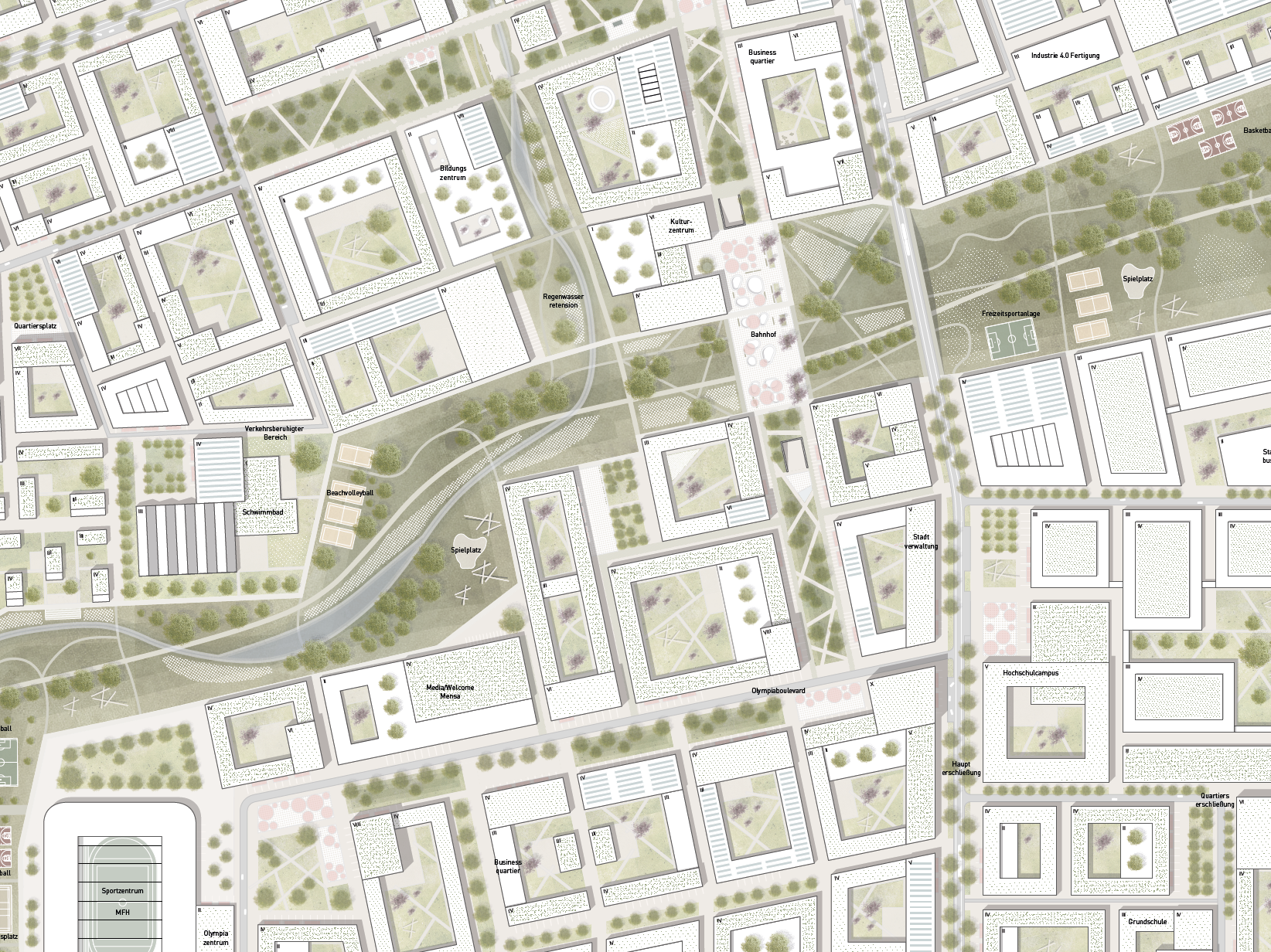
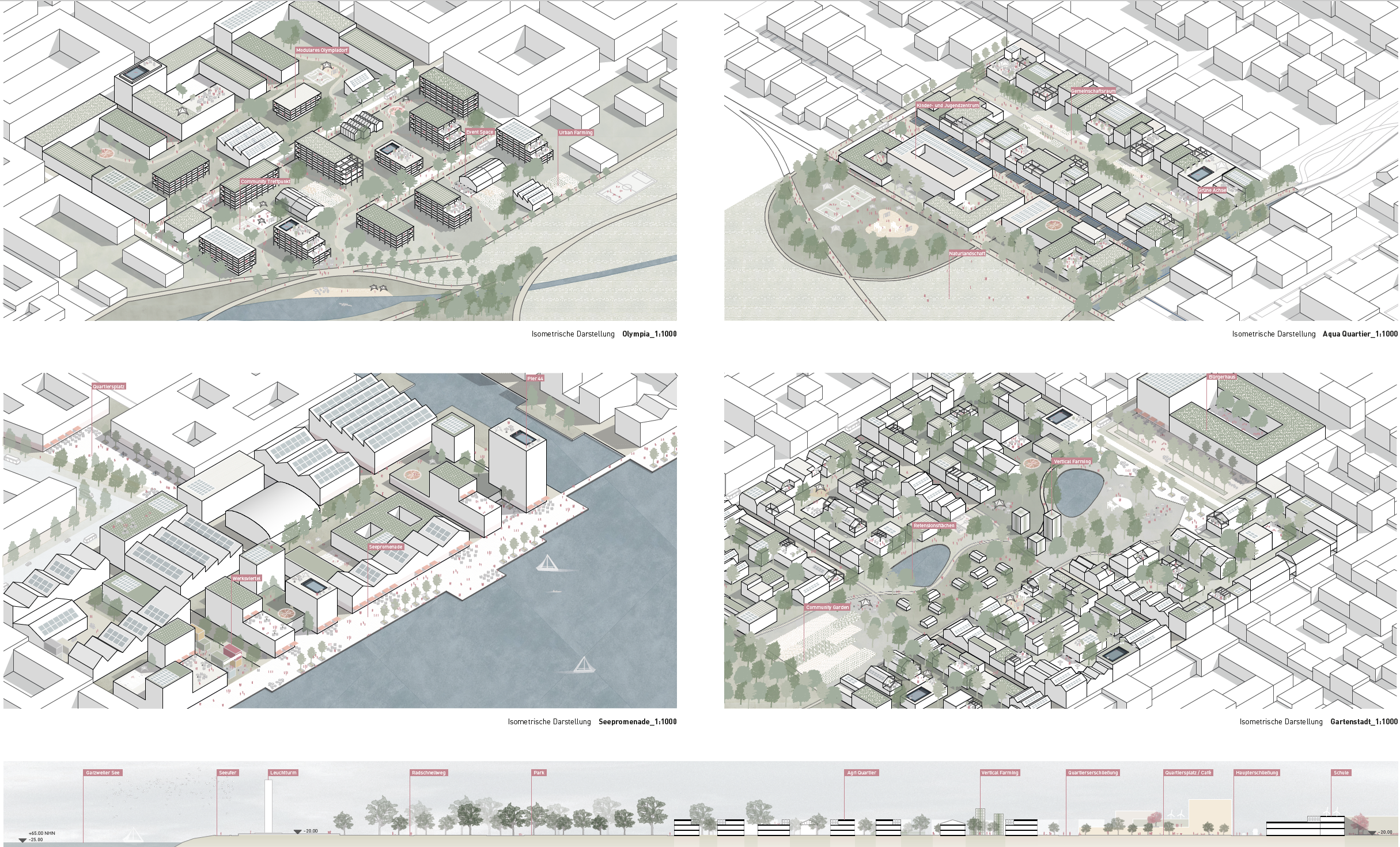
The project “Interlocked”, developed by Alesia Prendi, Alix Gelabert y Nuez, Maria Knoll, and Ivan Selednikov, received one of the two first prizes.
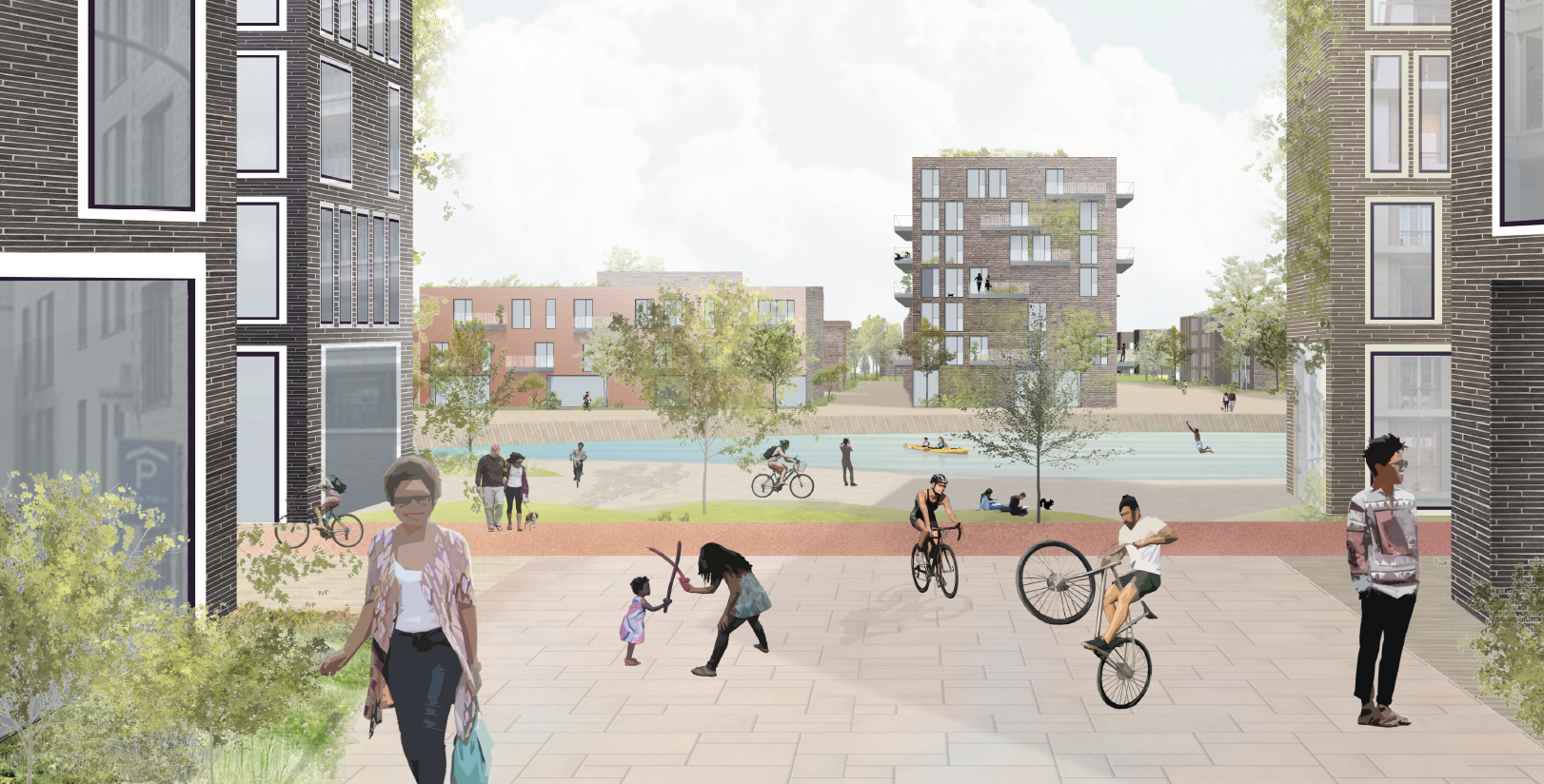
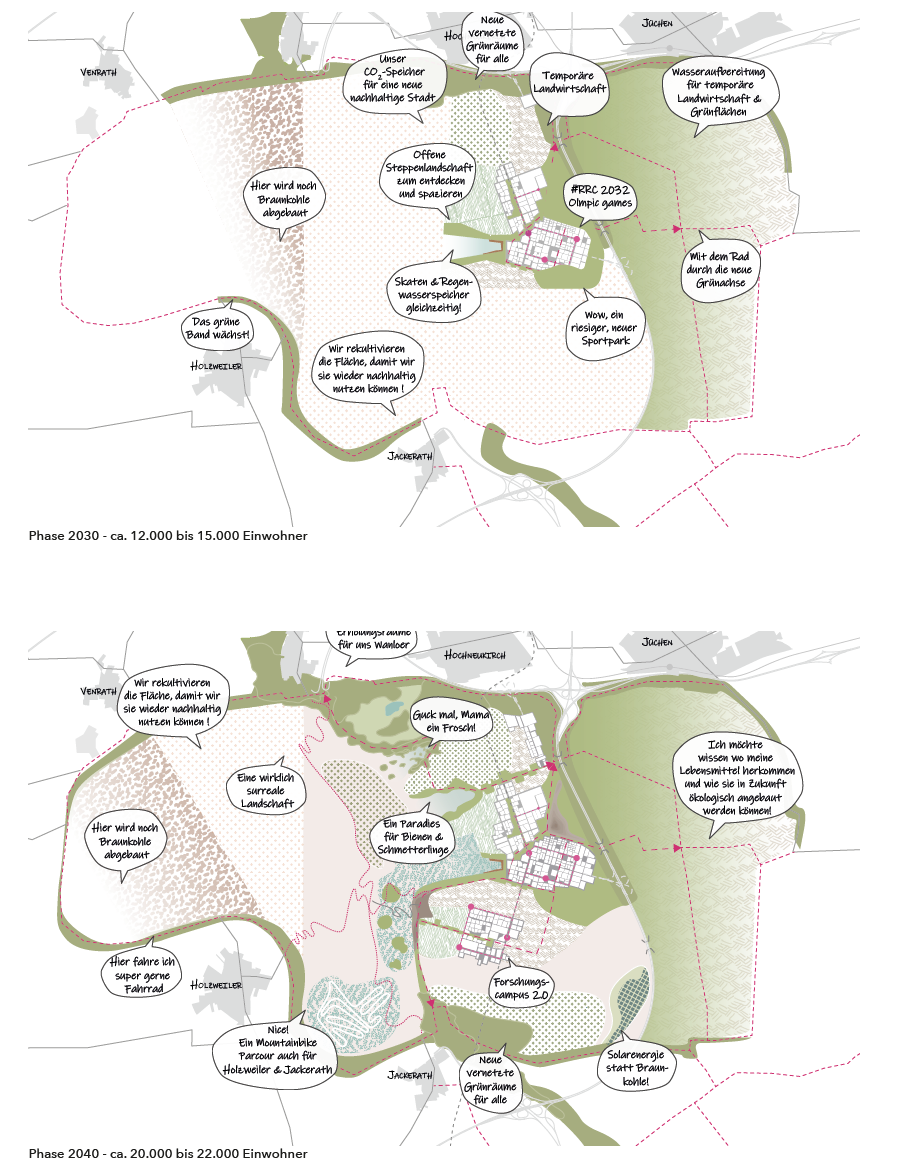
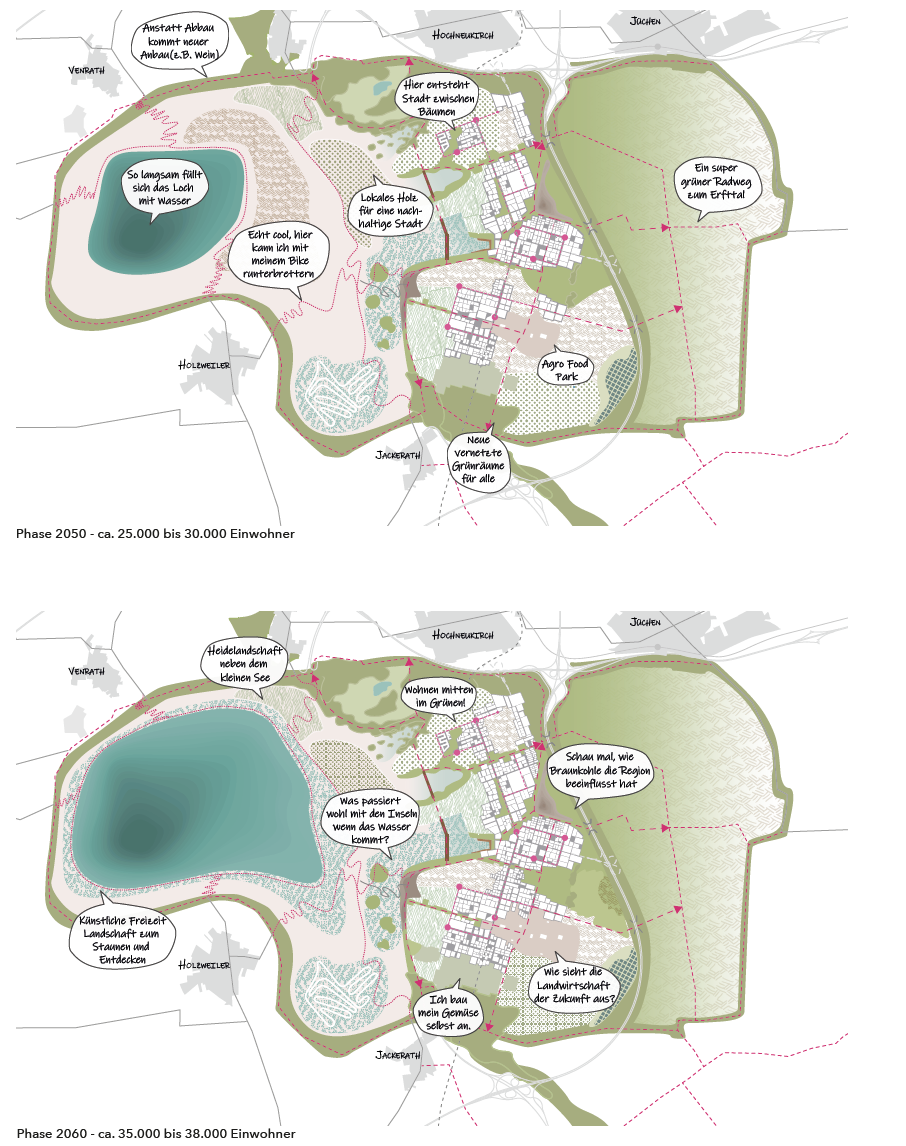
The proposal treated the transformation process itself as the project's central design principle. It established a spatial framework in which settlement development and landscape evolved together through the interplay of temporary and permanent uses, ecological qualities, and local spatial characteristics. In this way, the process of transformation became a defining quality of the future city.
Combining precise interventions with robust spatial structures, the project developed a strategy spanning multiple scales—from the regional landscape to individual urban elements. It also demonstrated how future residents could actively participate in shaping the ongoing development of the city.

Lost and Found
The second first prize was awarded to “Lost and Found”, developed by Elina Rahn, Felix Bubmann, Oliver Siebert, and Christoph König.
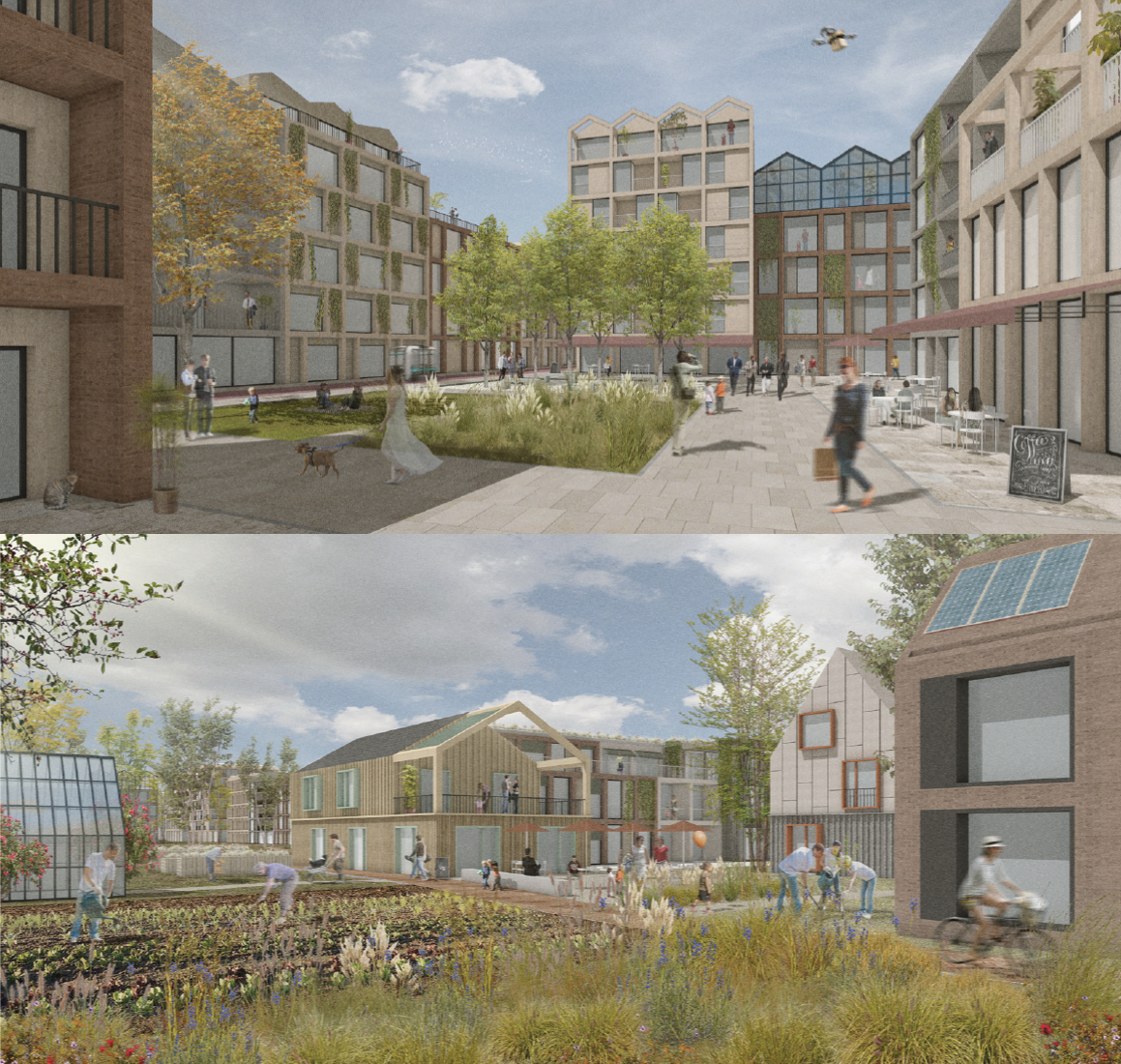
The project conceived the landscape as the connecting framework of the urban fabric. Green spaces extended deep into the city, linking different urban functions while continuing beyond the settlement into the surrounding regional landscape.
This spatial strategy enabled comparatively high urban density while minimising land consumption. Through everyday use, cultivation, and natural ecological succession, the green network gradually developed its distinctive character.
At the neighbourhood scale, the students designed a comprehensive catalogue of urban landscape elements and their spatial relationships without losing sight of the overall development of a city of approximately 50,000 inhabitants.
Further prizes and commendations were awarded to students from TU Berlin, RWTH Aachen University, and TU Braunschweig.
The complete competition results are available on the website of the Johannes-Göderitz-Foundation