
MCube - Transformative Mobility Experiments (TrEx)
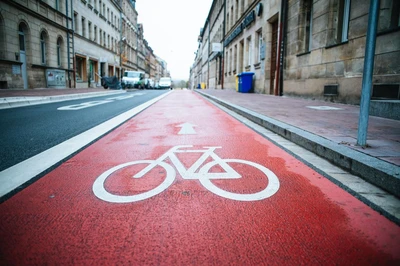
The MCube flagship project Transformative Mobility Experiments (TrEx) aimed to systematically understand experiments for the sustainable transformation of mobility, develop them further in a participatory manner,
test them in an application-oriented way, and strengthen them with new tools and perspectives.
TrEx saw experiments and crisis experiences as the key to the mobility transition. Specifically, TrEx dealt with three types of experiments that are relevant to mobility transformations and should be considered in a differentiated manner: natural experiments and crisis experiences, everyday (social) experiments, and
innovation experiments or real-world laboratories.
MCube - Car-reduced neighborhoods for a livable city (AQT)
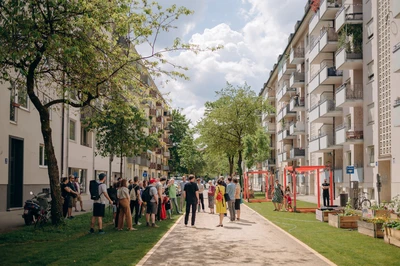
“Car-reduced neighborhoods for a livable city” (AQT) was one of three MCube flagship projects. The AQT project team developed and tested two spatial and transportation concepts for Munich with the following goals: to increase acceptance and use of multimodal transportation options, significantly reduce individual car ownership and use, and thus enable an upgrade of the space.
Railway stations for green and socially-inclusive cities (RAIL4CITIES)
The central objective of RAIL4CITIES was to develop a new, ready-to-use and highly applicable model for railway stations as promoters of sustainable cities (SCP model), combined with a common European methodology and set of tools for its effective implementation. The project took into account interrelated obstacles (profit-oriented business model, complex network of actors and stakeholders, policy gaps) and provided decision-makers with tools to turn railway stations into promoters of sustainable cities with the RAIL4CITIES Toolkit.
NEBourhoods (NEB)
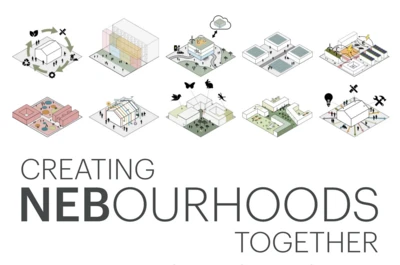
Centered around the New European Bauhaus Project „NEBourhoods”, in the context of the subproject 5.1 „Reprogramming Private Public Spaces“, the research dealt with the question how obsolete urban office complexes – the everyday architecture of globalization – can become productive, mixed-use, and publicly accessible elements of the city in the time of multiple ecological and social crises. Formerly largely closed off to the public, the change of the urban function of these buildings, combined with their massive floor areas, could become decisive agents of change in making European cities more resilient in the current situation. Besides the practical implications that are in the foreground of the NEB effort, the project also contributed to more knowledge about a type that is still largely under-researched in urban design.
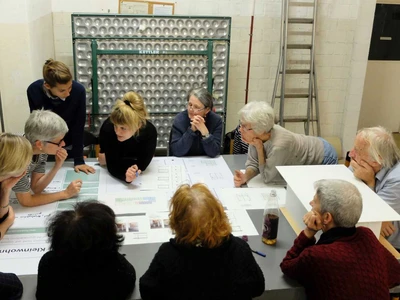
New housing cooperatives as vectors of change
“New cooperatives” develop affordable, high-quality housing that serves the common good. However, little research has been done on them as vectors of change in urban development. In addition to providing housing, they can also lead to a common-good-oriented understanding of social developments and thus contribute to social change. The research project has two objectives: First, the housing situation in Munich is compared with current developments in Vienna, Zurich, and Bern (each with a significantly higher proportion of cooperative housing). Framework conditions such as land policy, regulations, and control instruments, as well as pioneering projects, play a central role here. Second, existing housing projects in these four cities are being researched.
EIT Urban Mobility SOUL
The main task was the concept and design of a DSS framework addressing relevant stakeholders’ needs in planning and management of mobility hubs. The software aims to provide state of the art data exploitation, information processing and knowledge management in combination with a transdisciplinary communication approach.
Informing Air and Ground
Current developments in digitization, sensor technology, and robotics at the territorial scale are increasingly calling into question how open spaces in urban developments have been planned and built as more or less permanent and unchangeable developments—for example, without directly responding to environmental influences. With increasing digitalization, more and more precise information about the negative external influences to which landscapes are exposed is also available in real time. Against the backdrop of increasing ecological stress and accompanying negotiation processes between affected actors in urban and suburban areas, it is therefore likely that so-called “responsive landscapes” will be developed more frequently in the coming decades.